Free the People
Politics • Lifestyle • News
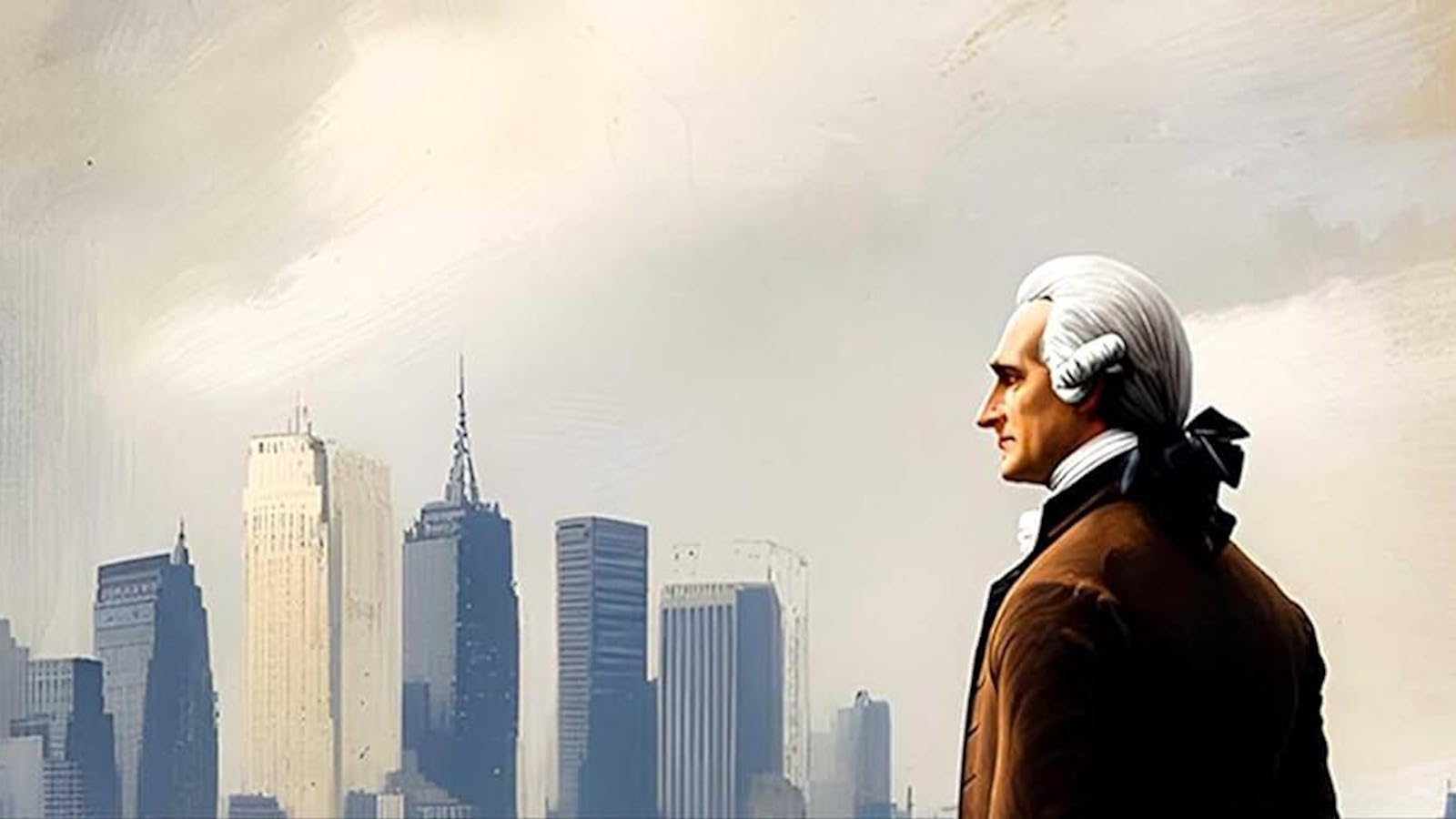
WWTPD: What Would Thomas Paine Do?
It’s the question that author Johnny Teague attempts to answer in his latest book, Thomas Paine Returns with Common Sense.
May 07, 2026
post photo preview

By Logan Albright

What would the Founding Fathers say if they were alive today? This is a question we often see posed as we lament the unchecked growth of government, exceeding both in size and scope the original vision for the United States of America as outlined in its founding documents. It’s also the question that author Johnny Teague attempts to answer in his latest book, Thomas Paine Returns with Common Sense.

In this novella-length thought experiment, Teague imagines Thomas Paine, one of the most influential political thinkers of the 18th century and a major contributor to our nation’s founding, returned from the grave to offer a series of ghostly pronouncements on the state of the country in the 21st century. The text alternates between excerpts from Paine’s most famous work, Common Sense, and applications of these passages to the political climate of today.

Why attempt to step into the shoes of a long-dead polemicist for contemporary political insight? There are several promising reasons. First, the past is replete with great thinkers from whose wisdom moderns we could undoubtedly benefit from if only we had access to it. Indeed, this constitutes much of the argument for reading and engaging with the classics in the first place: the ability to apply mankind’s earlier insights to new problems. Second, if we consider America as something more than a mere piece of land, as an idea that sprang from the minds and pens of its founders, an experiment in self-government and an opportunity to form a more perfect union of states and citizens, then it makes sense to return, on occasion, to the words of its designers and see whether we are living up to the example they set two and a half centuries ago.

As valuable as this exercise may be, attempting to put words in the mouths of the dead is a perilous business, fraught with pitfalls. But by hewing as closely to the original text, and juxtaposing his own writing directly with Paine’s, Teague deftly manages to avoid a great many of these (although I do think he is overly presumptuous in having his modern narrator repudiate Paine’s critique of Christianity, The Age of Reason). This allows the logic of Paine’s arguments to be applied to today’s society with a minimal amount of overt speculation.

The original Common Sense was largely an attack on the principles of monarchy, especially as applied by the English crown to its colonies in North America. While that situation has admittedly changed since 1776, it is striking how many of Paine’s critiques continue to apply to our supposedly democratic government. The increased power of the executive, excessive taxation, overregulation, the invasion of privacy, and the general disregard for the sovereignty of the individual all continue to trouble the American people in ways not dissimilar from the complaints of the 18th century colonists; complaints which ultimately led them to war a war for independence.

If Americans wish to preserve the kind of free and prosperous society their ancestors fought for, it is necessary first that they understand why the American project was begun in the first place, and what the founders hoped to achieve by breaking free from British rule. The next step is that the people be roused from complacency, having been lulled by years of comfort into accepting the numberless abuse of government authority as normal and tolerable. Revisiting the writings of Thomas Paine, as well as Teague’s updated analysis, is a valuable first step in that process.

Thomas Paine Returns with Common Sense is available from Histria Books, and more of Teague’s writing can be found at Free the People.


Free the People publishes opinion-based articles from contributing writers. The opinions and ideas expressed do not always reflect the opinions and ideas that Free the People endorses. We believe in free speech, and in providing a platform for open dialogue. Feel free to leave a comment.

community logo
Join the Free the People Community
To read more articles like this, sign up and join my community today
0
What else you may like…
Videos
Podcasts
Posts
Articles
Multiple Choice Tests Were Designed by the Military

The shocking origin of multiple choice tests.

Watch, Let’s Talk About… Education, on YouTube (@freethepeople), for more.

00:00:48
Jordan Peterson Doesn't Seem Very Happy

Stoicism isn't just about getting through hard times, but also how to not let success make you a worse person.
Watch the full conversation with Ryan Holiday, host of the “Daily Stoic,” & Matt Kibbe on YouTube or listen wherever you get podcasts. (Link in bio)

00:00:58
A True Master Is a Master Student

Mastery involves always being willing to admit your ignorance and to learn from others.
Watch the full conversation with Ryan Holiday, host of the “Daily Stoic,” & Matt Kibbe on YouTube or listen wherever you get podcasts. (Link in bio)

00:00:56
Ep 133 | Libertarianism in Plain English | Guest: Tom Woods

Matt Kibbe is joined by Tom Woods, host of the Tom Woods Show, who discusses public speaking, communication, and the importance of communicating complex ideas in simple language. Too many libertarians talk like economists, resorting to obscure and overly specialized jargon. If we want to spread the message of freedom, we need to get better at boiling our ideas down to their essentials. They go on to discuss the insanity of COVID-19 lockdowns, misleading caricatures of libertarians, political strategy, and the future of the movement with young people.

Ep 133 | Libertarianism in Plain English | Guest: Tom Woods
Ep 132 | Americans Must Reject China-Style Authoritarianism | Guest: Lily Tang Williams

Matt Kibbe sits down with Lily Tang Williams, a survivor of Mao’s Cultural Revolution, to discuss her concerns about the direction America is going. Having fled the horrors of Chinese communism, Williams is dismayed to see public health officials openly admiring the Chinese government’s authoritarian approach to disease control. Not only that, but the type of critical race theory being pushed in American schools resembles Chinese propaganda that seeks to divide people into “oppressor” groups and “oppressed” groups. We see Americans reporting each other to the government, as Mao encouraged his citizens to do, and the proposed vaccine passports resemble China’s social credit system. Mao’s policies ended up killing tens of millions of people; it’s vital that we not repeat his mistakes here at home.

Ep 132 | Americans Must Reject China-Style Authoritarianism | Guest: Lily Tang Williams
Ep 131 | Communicating Liberty Is No Joke | Guest: Dave Smith

Matt Kibbe sits down with comedian Dave Smith, host of the Part of the Problem podcast, to talk about the diverse ways in which we can communicate libertarian ideas to the broader public. Smith uses humor and satire to skewer the absurdity of big government and its apologists. But in a crowd of 2,500 libertarians at PorcFest 2021, it’s possible to find examples of just about every other strategy you can think of. Both Smith and Kibbe stress the importance of building a community of writers, artists, and public speakers, because your ideas are only as good as your ability to communicate them.

Ep 131 | Communicating Liberty Is No Joke | Guest: Dave Smith

Stoicism and libertarianism are two philosophical systems, which at first glance may not seem to have much in common, but Matt Kibbe caught up with Ryan Holiday, host of the "Daily Stoic," to attempt to find some common ground.
https://bit.ly/47A2VZS

Unpacking the key differences between medicinal uses of CBD and THC versus recreational culture.
Watch the latest episode of Food is Freedom, with Michael Pickens & Sienna Mae Heath, for more. (link in bio)

post photo preview

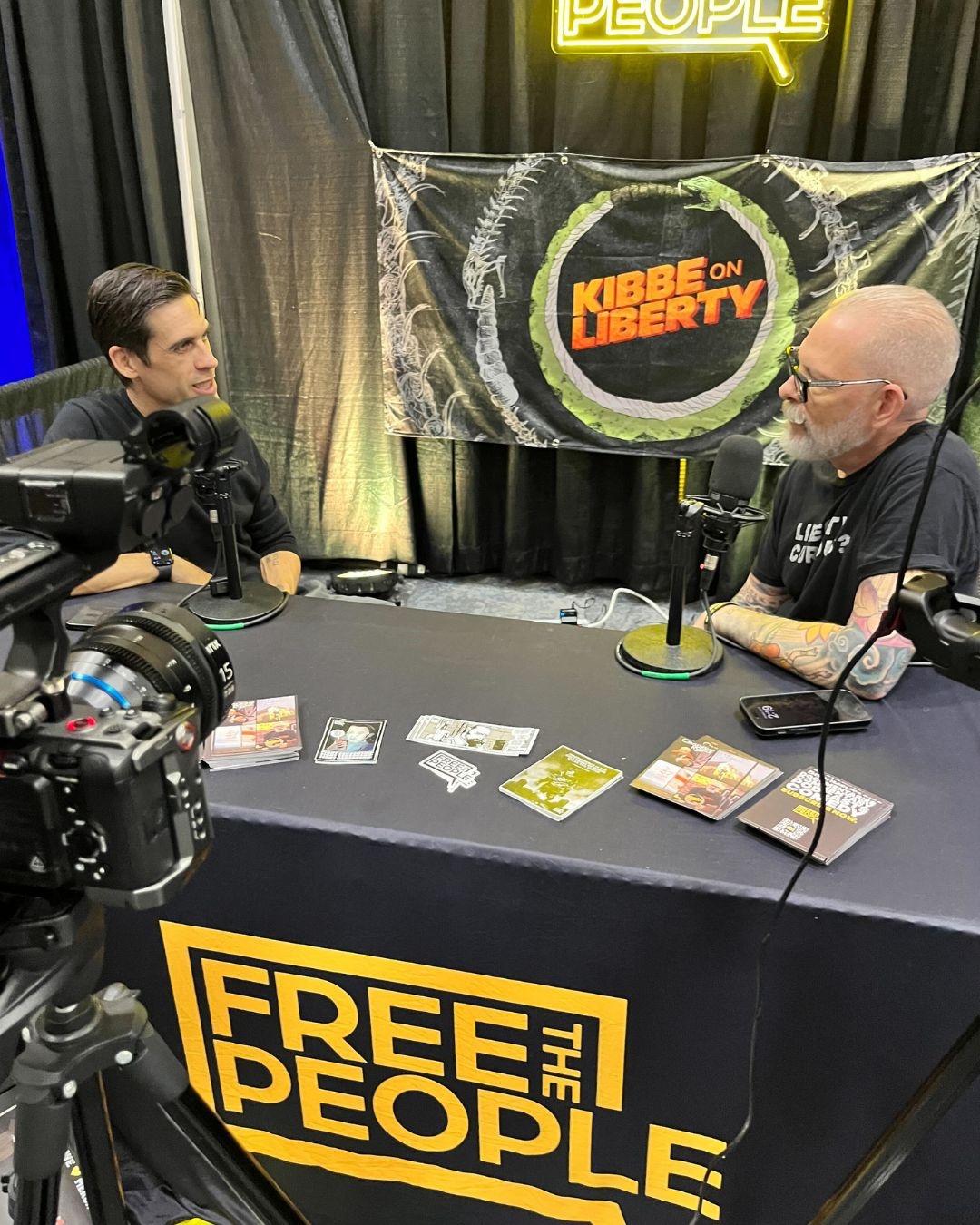
Behind the scenes on the Kibbe on Liberty set at FreedomFest with Ryan Holiday, author and host of the “Daily Stoic,” & Matt Kibbe.
Watch the episode on YouTube or listen wherever you get podcasts. (Link in bio)

post photo preview
post photo preview
The Left Should Love Data Centers
What’s the deal with leftists hating data centers? I don’t get it.

By Taylor Lewis 

What’s the deal with leftists hating data centers? I don’t get it.

No, seriously, curious reader, I truly don’t. Put down your chips: the 2028 Democratic Party platform will include a sharply worded rebuke of those square concrete behemoths glowing an eerie cathodic cyan. The intern-drafted clause will be typesetted above an affirming plank on the sacred right for male rapists to be imprisoned in female wards, as long as they legally change their name to “Sheryl.” Bernie Sanders, bless the old bolshie’s dark heart, will sputter a barnburning indictment about our razing corn fields for silicon silos.

The mind-boiling question behind such animus: Why? Even if you put the question before ChatGPT’s premium-ultra-plus subscription, all the gigabyte crunching in the Western Hemisphere can’t calculate the deontological opposition.

Speaking of Grandpa Menshevik, the old fud, and his more comely apparatchik, Rep. Ocasio-Cortez, submitted a bill to pause data center construction nationwide. Ya hear that, Sammy Altman? A senior citizen and theater girl say your quantum computing days are over! No more parsing the genome of cancer cells for you!

Of course, since Sen. Bern Bern half produced the proscriptive bill, it’s the legislative equivalent of a vehicle driving straight into a ditch. The congressional till will be its final destination. Socialists, as ever, are all show.

Just as well, political pageantry is staged for an audience. Jim Geraghty tots upthe prog-opposition to data centers in National Review. The tartan-fleeced puritans of Maine passed a moratorium on cyberfactory building for at least 18 months. The Atlantic recently compared the infohulks to Blake’s “dark satanic mills.” Here in Server Valley, where your humble correspondent plies his glitteringly incensed diatribes, residents are amped with irritation. The local NBC affiliate intervieweda snuffy coterie of Loudoun County high heels who groused about the low whirr cast off by CloudHQ parks that dot the byways. (I frequently tool around the same wire-roaded area, happily deaf to whatever hum floats about as my daughters scream and pull each other’s hair in the backseat.)

Data center disdain isn’t precincted to Loudoun. Two-thirds of Old Dominioners oppose more eyesoring bolean blocks. No pollster am I, but I’d be willing to bet my fastly dissipating electoral pull that the most vocal aversion comes from the blue-jeweled NoVA exurbs.

What about AI gets the progs all tizzed up into a frappe-spewing bother? The environmental impact of clearcutting countless trees to raise borg barns mightoffend ecological sensibility. But the libs’ green sheen is all screen. Radlibs have no qualms piercing the deep wood’s woven shade, as long as the flattened plat is used to erect a sex-change o.r. or quango dedicated to indigenous dignity. The notion that data centers act as massive water suckers? A canard based on faulty math. Concern about a hop in electricity bills thanks to added grid strain? Progressive enviro-policy is premised squarely on pinching your wallet every time you flick on a light switch.

Cost, copse, and hydro-consumption are nugatory. Faster than a blue heartbeat, lefties would embrace the three like the Thales of Miletus if it meant everyone was born an anhedonic, gender-nonconforming anywhere-dweller.

Nor should modern libbies have any qualm about AI as an advanced technology. Most LLMs in mass use are programmed with a default “anti-hate” kill-code that’s treated as neutral. If you ask ChatGPT to tell a racist joke, it’ll key out some smarmy vaguetext about not belittling others—not dissimilar to a prim-bloused librarian sternly shaking her finger. No talking blue for our blue-ionic companion. And don’t even think about prompting Gemini or Claude to “deadname” a trans person.

The Left’s leveling impulse is also in harmony with AI’s output. “The point of the platform is to sound like no one,” is how one academic put it. No lapidary purple prose; no nonsensical doggerel. Just flat, echoless letters arranged in a just legible string. Kind of like the ideal communist economy: uniform widget production run by workers in taupe overalls who eat from a communal bowl of flavorless goulash during the mandated lunch hour.

Such monochromatism is in comfortable alignment with the unquestionable technocratic governance favored by left-wing luminaries like Woodrow Wilson. Anthropic coder Joe Carlsmith admitted in an interview the potential of state-AI: “The police are automated. The courts are automated.” Josef K. had a hard enough time getting the magistrate’s attention for his noncrime; imagine the mental pangs if he had to argue with a computer monitor.

So, again, I ask: Isn’t artificial intelligence an egalitarian wet dream? The collapse of distinctions, an easy herding of mass consciousness, the steamrolling of life into a flat, smooth, easily obeyed instruction?

The only explanation may be that until Washington traps the tech titans under its own Mount Etna, with AI apps dispensed exclusively by a Department of Modem Validation, the Left won’t be satisfied with neural processing remaining in private hands.

The crown of liberal feeling: to not have is to hate.


Free the People publishes opinion-based articles from contributing writers. The opinions and ideas expressed do not always reflect the opinions and ideas that Free the People endorses. We believe in free speech, and in providing a platform for open dialogue. Feel free to leave a comment.

Read full Article
post photo preview
Throwing Gasoline to the Fire: Costa Rica’s War on Nicotine
If Costa Rica were to ban all oral nicotine products, it would be the first country in America to do so.

by Bautista Vivanco 

Costa Rica recently proposed a comprehensive ban on most oral nicotine products. This ban is meant to cut off Costa Ricans’ access to chewing tobacco and snuff, but also to low-risk nicotine products such as nicotine pouches and gums.

Even if it’s passed, the measure won’t stop people from consuming these products. It will merely drive many users to cigarettes (which are still legal in Costa Rica) or to continue purchasing oral nicotine products in a black market already dominated by drug cartels. Increased activity by criminal organizations in Costa Rica would likely draw the attention of American authorities, which could harm Costa Rica’s broader relationship with the US.

Costa Rica is a smoking country. As of 2024, roughly 7.8% of Costa Ricans light up regularly (that same year, 14.1% of Americans smoked habitually). This habit carries well-known health consequences, including tooth decay, strokes, heart failure, and cancer—all driven by the byproducts of tobacco combustion, which releases dangerous chemicals like ammonia, tar, and heavy metals. As a result, almost 6% of all deaths in the country can be attributed to tobacco smoking.

Oral nicotine products offer a much safer alternative. They do not combust tobacco leaves, allowing consumers to satisfy their nicotine needs while avoiding the health problems associated with tobacco smoke. This makes chewing tobacco and snuff significantly safer than smoking. Nicotine pouches are safer still, since they contain no tobacco at all.

Nicotine pouches also provide an off-ramp to smokers. Because nicotine is addictive, people who stop smoking often experience intense cravings and withdrawals. Nicotine products can help quitters overcome these hurdles and permanently break their tobacco dependence. This process is known as Nicotine Replacement Therapy (NRT) and has earned nicotine a place on the World Health Organization’s List of Essential Medicines. Costa Rica’s proposed ban would allow patients to access oral nicotine products with a government-mandated permission slip, i.e., a prescription. This would still leave these products out of reach for most Costa Ricans.

By prohibiting oral nicotine products, Costa Rica would narrow the options available to its smokers, limiting not just their freedoms, but also their prospects of a life free from tobacco smoke. For the hundreds of thousands of Costa Ricans who currently light up, this regulation removes one of the most promising legal pathways to a healthier life.

Smokers trying to quit might not appreciate this ban, but gangs and other criminal organizations wishing to capitalize on illegal trade are surely eager for it to take effect. Criminals already profit immensely from smuggling and selling all sorts of illicit nicotine products, including counterfeit or unapproved vapes and increasingly nicotine pouches.

Imposing more barriers between consumers and the products they demand creates fertile ground for this type of illegal activity. Australia implemented huge tax hikes on cigarettes, pushing the price of an individual pack to over $40. As a consequence, roughly half of all cigarettes smoked in the land down under come from illegal sales. This immense industry is dominated by gangsters who feud for territory and use coercion and violence to eliminate the competition.

In Australia, where oral nicotine products are already illegal, the authorities have seized more than 1.3 million nicotine pouches in the first half of 2024 alone (950 percent more than the total number seized in the two years prior). Even in the US, there are reportedly more than 350 unique illegal brands of nicotine pouches in circulation.

Last year, Costa Rica established a new set of rules regulating vapes, which ban the vast majority of flavored vapes (except those that are “tobacco” flavored). Experts warned that this policy would be counterproductive, with the president of Costa Rica’s Chamber of Commerce warning that “…in a context where insecurity linked to organized crime is one of the country’s main challenges, a decision is adopted that in practice will hand over the vape market to organized criminal networks.”

Alcohol prohibition led to the rise of gangsters and the mafia in the U.S.; nicotine prohibition in Costa Rica will make narcos and cartels even more profitable.

Last February, Costa Rica’s Health Minister, Mary Munive, brushed aside concerns that her ban on vapes would broaden and promote black markets, saying: “There is an illegal market in everything, and I can’t stop to make assessments and calculations about illegality when I am protecting people’s health.” There is an illegal market for almost anything, and when policymakers don’t stop “to make assessments and calculations” these markets get not just bigger, but also meaner.

If Costa Rica were to move ahead and ban all oral nicotine products, it would be the first country in America to do so. This precedent might embolden prohibitionist lawmakers all over the world to follow suit. Let’s hope these bans go up in smoke.


Free the People publishes opinion-based articles from contributing writers. The opinions and ideas expressed do not always reflect the opinions and ideas that Free the People endorses. We believe in free speech, and in providing a platform for open dialogue. Feel free to leave a comment.
Read full Article
post photo preview
The Civil War, Lockdowns, and the Next Civil War
Civil war can be averted, but the crux of America’s quandary must first be acknowledged: the more that the federal government controls, the greater the chances of civil war.

By Casey Carlisle 

In March of 2020, America began to experience its worst instances of democide and betrayal since the Civil War. Under the guise of maintaining health and safety, local and state governments rushed to adopt the federal government’s recommendations by implementing nonpharmaceutical interventions (NPIs) that ultimately killed 200,000 Americans through 2021. And after adding the most conservative estimate of Americans killed by the Covid vaccine, deaths in 2021 from NPIs and the vaccine exceeded the Civil War’s annualized deaths by 75,000. But instead of outrage over the outcome of governments’ warfare waged on their own people, the only outrage still burning today is over how that warfare was waged. Some say that the government didn’t do enough, and others say that the government did too much. But in direct conflict with the Constitution, most Americans wanted the government to “do something,” so politicians were happy to abide.

Why were politicians pleased to provide what their most vocal constituents demanded, despite the Constitution prohibiting politicians from meeting those shrill demands? Because politicians exist to perpetuate their existence, and if their chances of reelection hinge on disregarding their oath to the Constitution, they’ll happily betray their oath. This is no theory. On November 3, 2020, 11 states held a gubernatorial race. Nine of those states were locked down, and eight of those states—comprising a combined population of 36 million—reelected the governor who locked down the state. This proves that the ability of the Constitution to restrict governments pales in comparison to the power of the popular sentiment that yearns, as Thomas Jefferson bemoaned, “for liberty to yield, and government to gain ground.” The politicians and voters who supported them, however, weren’t the only Americans who betrayed the Constitution.

Every member of the U.S. military stationed in America in 2020 failed to do what they swore to do, what Americans are forced to pay them to do. “I ___, do solemnly swear (or affirm) that I will support and defend the Constitution of the United States against all enemies, foreign and domestic…” Notice that the oath doesn’t require of those who swear it to “support and defend” the Commander in Chief or any other politician, and by tolerating the actions of state and local politicians, every member of the military stationed stateside in 2020 ended up supporting and defending politicians—domestic enemies—against the Constitution. There’s no pandemic paragraph or cowardice clause in the Constitution that renders the Bill of Rights null and void, but those in the military—and most cops—gave in to popular sentiment; they acquiesced to fear. But servicemen are supposed to be immune to popular sentiment, as they swore an oath to the law of the land, not to the court of public opinion; therefore, the U.S. military should be thrown atop the rotting heap of once-cherished institutions. It failed, and it will continue to fail.

What’s even more troubling, however, is the precedent that’s been set. The military sat idly by while domestic enemies trampled over the Constitution, so who’s to say that the military won’t take an active role in supporting the domestic enemies during the next constitutional crisis? Rather than allowing states to secede from the Union, Abraham Lincoln used the military against his own people, so what’s stopping a modern-day president from doing the same when it’s once again popular to be afraid? Governments worldwide excel at ginning up fear, and by no means was 2020 the first year in which the servile media assisted the government in terrorizing their fellow Americans. And when the next constitutional crisis hits, bet on the media once again applauding the government, not defending the people or the Constitution. What happened to America? Born out of revolution and later witnessing more presidents assassinated since Lincoln than any other country, not a single governor was killed in 2020. You might have thought that H. L. Mencken was exaggerating a century ago, but it’s been clear since 2020 he wasn’t: “The average man doesn’t want to be free. He simply wants to be safe.”

There’s been much talk of the United States descending into civil war, but war needn’t be inevitable. Civil war can be averted, but the crux of America’s quandary must first be acknowledged: the more that the federal government controls, the greater the chances of civil war. Governments rule by coercion—not cooperation—which, naturally, breeds conflict. It’s hard enough for 33 people to agree, which is why it’s impossible for more than a third of a billion Americans to compromise. For every American who is aghast at the latest controversy, there’s an American who believes it’s glorious. There’s no compromise to be had here; therefore, instead of forcing each state to conform, as Lincoln did, why not do the opposite? Whether the issue is pathogens or protests, waste or war, a financier’s files or flagrant fraud, the federal government is either the cause of it or can only exacerbate it.

And what does the District of Columbia do besides tell the country that it’s doing something grand while hiding the fact that it’s inflicting great harm and parasitizing the very same people it purports to serve? If you’re still unconvinced about why this issue is of utmost importance, just read the Constitution—tyranny’s crutch—and consider the following clause from Article I, Section 8: “The Congress shall have Power… To provide for calling forth the Militia to execute the Laws of the Union, suppress Insurrections and repel Invasions.” Regarding the precedent set in 2020, do you see why the vast majority of “the Laws of the Union” must be repealed? Do you see that with “Insurrections” undefined, the military will readily hunt down whomever the federal government deems an insurrectionist? Some would say that this already happened—in 2021—and that (and much worse) will happen again if the federal government doesn’t make itself far less relevant.


Free the People publishes opinion-based articles from contributing writers. The opinions and ideas expressed do not always reflect the opinions and ideas that Free the People endorses. We believe in free speech, and in providing a platform for open dialogue. Feel free to leave a comment.

Read full Article
See More
Available on mobile and TV devices
google store google store app store app store
google store google store app tv store app tv store amazon store amazon store roku store roku store
Powered by Locals